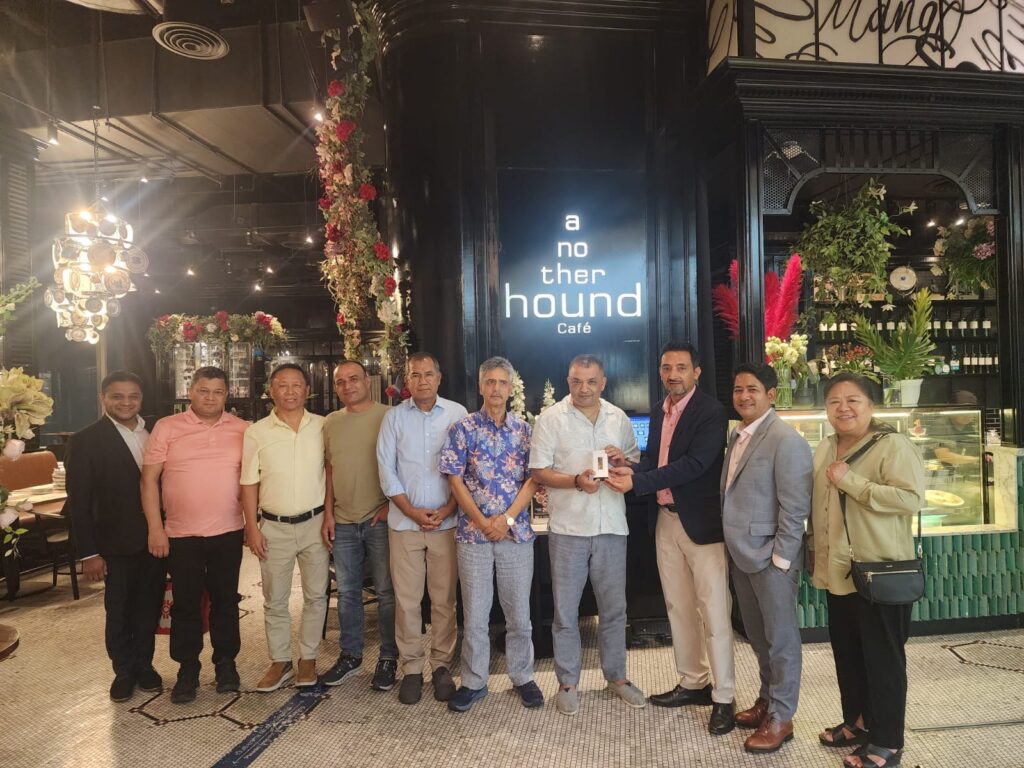
The Nepal Policy Institute (NPI) team, led by Chair Dr. Khagendra Raj Dhakal, held a policy dialogue with Hon. Gagan Thapa, Member of Parliament and General Secretary of the Nepali Congress, during his visit to Bangkok, Thailand in July 2025. The meeting brought together a group of Nepali professionals, entrepreneurs, and scholars based in Thailand and Nepal to explore how Nepal can strategically mobilize diaspora knowledge and talent for national development.
The conversation focused on strengthening institutional capacity, enhancing the capabilities of public service officers, and leveraging the global expertise of the Nepali diaspora across key sectors. Areas of discussion included work-integrated education, public policy, public health, and agriculture. The dialogue also emphasized the importance of inclusive leadership and the role of evidence-informed policymaking in addressing Nepal’s evolving governance challenges.
Key Themes Discussed
1. Capacity Building for Policy Leadership
Participants stressed the importance of enhancing the skills and capacity of public officials, elected representatives, and young political leaders across the entire policy cycle, from design to implementation and evaluation. Hon. Thapa expressed strong interest in the Nepal Policy Leadership Program (NPLP), NPI’s flagship initiative, and encouraged its expansion to include emerging leaders from across political parties.
2. Entrepreneurship-Focused Education and Recognition of Entrepreneurs
The dialogue highlighted the need for Nepal’s education system to embrace entrepreneurship-focused learning to empower youth to create opportunities for themselves. Hon. Thapa emphasized the importance of appreciating and supporting entrepreneurial efforts, particularly those led by Nepali youth and returnee diaspora. A stronger support ecosystem and social recognition for entrepreneurs were identified as critical enablers for national progress.
3. Public Health Insurance Reform
Reflecting on his tenure as Nepal’s Health Minister, Hon. Thapa shared insights on the national health insurance program and explored how international models, particularly Thailand’s Universal Coverage Scheme, could provide valuable lessons for enhancing Nepal’s public healthcare system.
4. Advancing Agricultural R&D
The dialogue underscored the need for increased investment in agricultural research and development in Nepal. Participants emphasized the importance of protecting Nepal’s indigenous biodiversity and establishing appropriate intellectual property rights frameworks to safeguard local knowledge and promote equitable benefit-sharing. The conversation also highlighted the potential of high-value crops, non-timber forest products, and the promotion of economically important native plants as key strategies for rural development and sustainability. The Chiuri plant was cited as a notable example, with discussions focusing on its organized cultivation and commercialization, reinforcing the broader need for structured support and innovation in this sector. Diaspora professionals and institutional partnerships were recognized as critical drivers in advancing these efforts.
Participants
This knowledge exchange featured contributions from the folowing Nepali scholars and practitioners based in Bangkok and Nepal:
- Mr. Sharad Neupane – NPI Founding Member; UNDP
- Dr. Asha Pun – UNICEF
- Mr. Ravi Maharjan – Chief of Operations, Wells International School
- Dr. Umed Pun – King Mongkut’s University of Technology Ladkrabang (KMUTL)
- Mr. Assajita Awale – Executive Member, Thai-Nepal Chamber of Commerce
- Mr. Deependra Chamlagain – Director, Samriddhi Foundation
- Mr. Nishant Khanal – Economist; Graduate, Lee Kuan Yew School of Public Policy
- Mr. Niranjan Shrestha – Executive Director, Laxmi Group
- Dr. Khagendra Raj Dhakal – Chair, NPI; Faculty Member, KMUTNB
Way Forward
The Bangkok dialogue reaffirmed the importance of connecting Nepal’s policy leadership with its global knowledge diaspora. These exchanges offer valuable platforms for shared reflection, innovation, and collaborative problem-solving. As a token of appreciation, Dr. Dhakal presented a memento to Hon. Thapa on behalf of NPI, underscoring a shared commitment to strengthening Nepal’s future through informed engagement and inclusive leadership.